
Why I Keep Talking About Menopause When I Talk About AI - Newsletter #58
Jul 10, 2026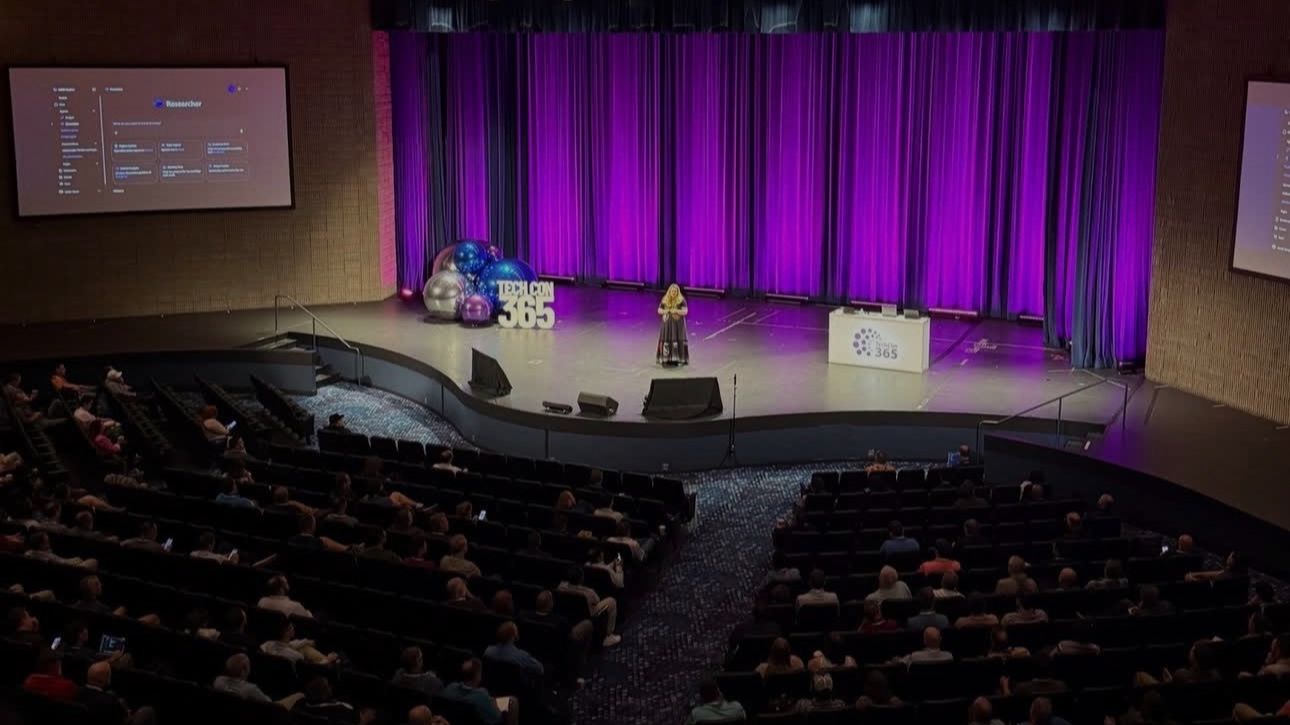
What self-advocacy, Copilot, and midlife taught me about becoming the expert of myself
In August 2025, I gave a keynote at TechCon Atlanta and began saying the word "menopause" out loud in professional spaces.
Not whispered.
Not softened.
Not hidden behind "wellness" language.
Menopause.
Since then, it has become part of almost every conversation I have about AI, Copilot, work, leadership, and the future of how we support people through change.
Two months ago in May, I stood on a keynote stage again—this time in Melbourne, Australia, at the Digital Workplace Conference—and I brought it up there too.
Whenever I talk about Microsoft 365 Copilot, I talk about how I researched my keynote and my health using Copilot Researcher, and how that experience fundamentally changed the way I think about AI.
Every time I demo my menopause moment with Researcher, I come back to the same realization:
AI becomes truly powerful when it helps us understand ourselves, our work, and our humanity better.
The Moment I Started Connecting Menopause and AI
At first glance, menopause and AI might not seem connected.
One is deeply personal and physical. The other is technological and transformational.
But the more I work with Copilot, agents, and Researcher, the more I realize they intersect in profound ways.
Women in midlife are navigating enormous transitions while simultaneously being expected to adapt to one of the biggest workplace shifts in modern history.
We are learning AI while managing hormone shifts.
We are leading teams while battling brain fog.
We are expected to innovate while also caring for parents, children, partners, communities, and ourselves.
And yet, very few people are talking about that intersection openly.
So I started talking about it.
From TechCon Atlanta to the Digital Workplace Conference, Melbourne
At TechCon Atlanta, I began connecting conversations about AI, Copilot, workplace transformation, and menopause in a way that felt both deeply personal and professionally necessary.
More recently, at the Digital Workplace Conference in Melbourne, I expanded that conversation while speaking about agents, AI enablement, and how people are actually using Microsoft 365 Copilot in real-world scenarios.
That's the thing.
When technology changes this quickly, human conversations matter even more.
And menopause is a human conversation.
How I Use Researcher in Microsoft 365 Copilot
Many people think of AI research tools as a way to summarize articles or create reports.
I use Researcher for keynote development, strategic thinking, storytelling, workshop preparation, organizational analysis, market exploration, and understanding human behavior.
Microsoft 365 Copilot Researcher is an AI-powered research agent that helps tackle complex questions by combining information from your Microsoft 365 data, such as emails, meetings, files, and chats, with trusted information from the web. Rather than simply answering a question, it gathers evidence, compares sources, cites its findings, and produces thoughtful reports, making it feel like working alongside a professional research assistant.
Researcher doesn't just give me answers.
It helps me think. That is the difference.
A bunch of coincidental moments
In some of 2023 and 2024, I hadn’t been feeling great; I was having trouble remembering things; I was worried I had some symptoms from having COVID during the pandemic. I was gaining weight, and my hips were hurting.
I happened to attend a book launch event at Ms. Magazine HQ in Beverly Hills, where I live in Los Angeles, where I met Tamsen Fadal and Dr. Sharon Malone, two women who have helped bring menopause into the public conversation in meaningful ways. Ms. Magazine had also just published its Summer Issue: Menopause is fueling a movement.
Tamsen and Dr. Malone recommended The M Factor: Shredding the Silence on Menopause, a documentary that explores the realities of menopause and the ways it has historically been overlooked in healthcare and society.
That evening opened a door for me.
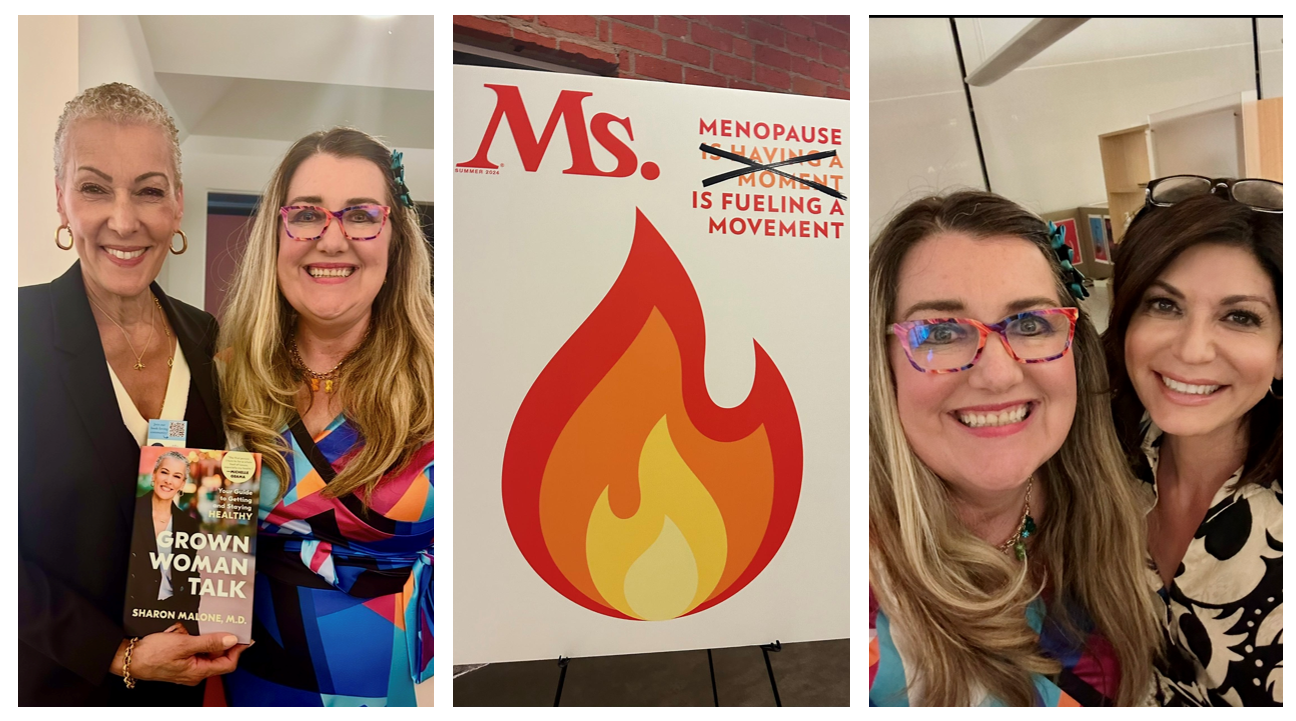
I left with books, resources, and information I hadn't encountered before. One of the event sponsors was Alloy, a telehealth platform focused on menopause care, and I found myself reading through the materials they shared and asking questions I hadn't known to ask before. They were an amazing resource and a new swim lane for my care.
What started as curiosity quickly became education.
I began exploring books, podcasts, physicians, telehealth resources, and communities focused on women's health. Through that process, I learned more about hormone replacement therapy, symptom management, and the kinds of questions I wanted to bring to my healthcare providers.
Not too long after, I was at a birthday party and got to talking to one of my friend's friends, and after a while of us sharing stories, she said to me, " What year were you born? I told her, and she said -
"Girl, you're in menopause." Little did I know she was a journalist on menopause.
It sounds simple now. But those moments changed my life.
At the time, I was struggling physically, mentally, and emotionally without fully understanding why.
Meeting women who were openly talking about menopause, and having someone recognize what I was experiencing before I did—gave me language for something that had been affecting my life without my understanding it. Because it is not researched or funded, and I don't know why, we DON’T talk about it.
Those conversations became the beginning of my own education, self-advocacy, and willingness to talk about menopause publicly.
AI as a health information aggregator
I also began using Researcher for something deeply personal.
I used a Microsoft 365 tenant that isn’t my work tenant. And I uploaded information about my health history, supplements, the fact that I have had my thyroid removed, symptoms, wellness goals, and menopause-related concerns.
Then I asked it to help me identify patterns and questions I should explore further.
What came back was one of the most organized summaries of my health journey I had ever seen.
I printed it. I brought it to my doctor.
And my doctor was genuinely impressed by the level of detail and preparation.
That moment entirely shifted how I think about AI.
Because this technology is not just about productivity.
It is about empowerment.
Helping people organize complexity. Helping us ask better questions. Helping us advocate for ourselves more effectively. Helping us become more informed participants in our own lives.
Ultimately, some of those conversations led to treatment options that I now manage with my doctor and through my insurance. We had found my estrogen levels had dropped to a 6; this is low, very low, and bad for bone density, brain fog, cardiovascular health, and many other symptoms around perimenopause and menopause. I’ve been using an HRT patch for more than a year now, and it has changed my life.
More importantly, the experience reminded me that self-advocacy often begins with education. The better informed I became, the better conversations I was able to have with my healthcare team.
The Prompt That Changed Everything
Given my health journey and my learning about AI, I became curious about the marketplace, jobs, and legislation in place for menopause.
I asked Researcher:
What is the addressable market for menopausal women who use AI, and how could Microsoft 365 Copilot support this underserved audience?
The results stunned me.
I discovered:
- The global menopause market is a rapidly growing sector in women’s health, valued at around $17.8 billion in 2024 and projected to reach $24.4 billion by 2030
- Midlife women are simultaneously navigating major biological and professional transitions
- Millions of women work in AI-exposed jobs, roles where AI tools, automation, and data analytics are central to productivity
- Global productivity loss from menopause symptoms is estimated at $150 million, and healthcare burden from related conditions is $660 million Grand View Research. These costs are compounded by the fact that many women experience menopause during the “sandwich generation” stage, balancing caregiving with their own health
And then I started looking deeper at the scale of what we are actually talking about.
Women make up roughly 51% of the population.
More than one billion women worldwide are expected to be in menopause or post-menopause by 2025.
But menopause never affects just one person.
When the woman in your life goes through menopause, the people around her experience it too.
Families experience it.
Workplaces experience it.
Relationships experience it.
That is potentially 2.5 billion people affected by menopause.
And yet, despite affecting half the population directly, and virtually all of society indirectly, women's health research remains dramatically underfunded, and many healthcare providers receive limited menopause education during their training.
That is astonishing.
And what is happening now? Gen X women like me are not staying quiet about this anymore.
We are comparing notes.
We are researching.
We are advocating.
We are demanding better healthcare, better workplace support, better science, and better conversations.
When I asked, "How could Microsoft 365 Copilot support this underserved menopausal audience?" I wasn't asking whether Microsoft had built a menopause solution. I was asking something much bigger: How can AI help women become more informed, more organized, and better advocates for themselves during one of the biggest transitions of their lives?
- Research and Education: Summarize trusted medical research, compare evidence from multiple sources, and explain complex topics in plain language so women can better understand symptoms, treatments, and emerging science.
- Healthcare Self-Advocacy: Organize symptoms, medications, questions, and medical history into clear summaries that can support more informed conversations with healthcare providers.
- Workplace Support: Help manage brain fog by summarizing meetings, organizing notes, drafting emails, tracking action items, and reducing cognitive load during busy workdays.
- Decision Support: Compare treatment options, lifestyle changes, books, telehealth providers, and educational resources to help women make informed decisions in collaboration with their healthcare teams.
- Community and Storytelling: Help women organize their own experiences, write about them, and share their stories, contributing to a broader cultural conversation that reduces stigma and isolation.
The opportunity isn't to use AI to replace human expertise. It's about using AI to help get through this underfunded and misunderstood chapter in our lives.
This Isn't a Trend. It's a Movement.
What has surprised me most is how quickly the conversation is accelerating.
In the few short weeks standing on stage in Melbourne and drafting this article, I watched menopause move from that article in Ms. Magazine - Summer 2024 and a private health topic into public conversation, workplace policy, philanthropy, media, and culture.
Rhode Island became the first U.S. state to require workplace accommodations for menopause-related conditions.
Melinda French Gates announced a historic investment in women's health and called for what she described as a menopause revolution.
FDA policy change: The U.S. Food and Drug Administration removed outdated black‑box warnings on hormone replacement therapy (HRT) that had linked it to heart disease and breast cancer. These warnings, based on misinterpreted data from the Women’s Health Initiative, had discouraged many women from treatment for decades. The removal signals a move toward personalized, evidence‑based care Hone Health.
Groundbreaking studies: The $50 million CARE (Cutting Alzheimer’s Risk through Endocrinology) study, led by neuroscientist Lisa Mosconi, aims to reduce women’s lifetime risk of Alzheimer’s disease by half, linking menopause to brain health fempowerhealth.beehiiv.com.
Diving deeper, I found more evidence that this conversation was expanding far beyond healthcare. New books, documentaries, television series, workplace policies, telehealth platforms, and even cultural events were emerging around menopause and midlife women's health.
What once felt like isolated conversations increasingly felt connected.
The more I researched, the more I realized this wasn't simply a health conversation anymore.
It was becoming a cultural movement.
The silence wasn't just being broken.
It was being shredded.
Welcome to the Menaissance or menopause renaissance fempowerhealth.beehiiv.com
A few days after speaking at the Digital Workplace Conference in Melbourne, I received a LinkedIn message from an attendee. With his permission, and with identifying information removed, I'm sharing it here:
"Hey Heather, just wanted to thank you for your awesomeness at DWC last week. Loved your energy and passion.
I especially appreciated your mentioning menopause in the workplace and the effects. My wife has been dealing with this for the past few years, and it is crippling. It needs to become a normal part of our conversations.
You go girlfriend!!!"
That message stayed with me. Because that's exactly the point.
This isn't only a women's issue.
It's a family issue.
It's a workplace issue.
It's a leadership issue.
And increasingly, it's a human issue.
The more we talk about it, the more we learn. The more we learn, the better questions we ask.
And the better questions we ask, the closer we get to becoming the experts of ourselves.
The Future I Want to Help Build
At Microsoft, we often talk about empowering every person and every organization on the planet to achieve more.
I believe that includes helping people understand who they are.
Not because they have all the answers.
But because they know how to ask better questions.
Whether that's understanding a new technology, navigating a career transition, managing a health journey, or preparing for the next stage of life, expertise begins with curiosity, autonomy and ownership.
Because in a world changing faster than ever, your greatest advantage is not expertise in a subject.
It is expertise in yourself.
That's why I keep talking about menopause when I talk about Copilot.
Because AI should not only help us work faster.
It should help us understand ourselves better.
Communicate more clearly. Think more strategically. Advocate more confidently. Lead more intentionally.
And create workplaces where people can thrive through every stage of life.
That is the future I want to help build.
And yes, I am going to keep saying the word menopause out loud on every stage I can.
Over the past two years, I discovered something unexpected:
I wasn't searching for answers alone. Millions of women were asking many of the same questions.
This article isn't the end of my research.
It's the beginning.
This Summer, I'll continue exploring these questions through a Persuasive Writing Credential Program through the Harris School of Public Policy at the University of Chicago.
I have a feeling I'm only beginning to understand where these breadcrumbs are leading, and there is a giant opportunity in sharing these stories to help women navigate the chapter we enter and stay in until we die by bringing needed change and legislation to the forefront.
Resources That Helped Me
Over the past two years, these are some of the books, documentaries, people, technologies, and resources that have helped me better understand menopause, women's health, and self-advocacy.
Books
- How to Menopause — Tamsen Fadal
- The Menopause Manifesto — Dr. Jen Gunter
- The Menopause Brain — Dr. Lisa Mosconi
- Estrogen Matters — Dr. Avrum Bluming and Carol Tavris
- What Fresh Hell Is This? — Heather Corinna
- Women's Bodies, Women's Wisdom — Dr. Christiane Northrup
- The New Menopause — Dr. Mary Claire Haver
- Grown Woman Talk – Dr. Sharon Malone
Documentaries and Series
- The M Factor: Shredding the Silence on Menopause
- Balance Docuseries on Perimenopause
- Dr. Mary Claire Haver – The unPaused Podcast
Healthcare and Education
- Dr. Sharon Malone
- Dr. Mary Claire Haver (The Pause Life)
- Alloy Health
Technology/Inspiration
- Microsoft 365 Copilot Researcher
- The beautiful community of feral GenX women going through perimenopause and menopause on Threads and TikTok
- Melani Sanders – The president of the WeDoNot Care club, book and Hot Mess Express.
- Thank you to David Wilhelm, Sharon Toler, and the folks at TechCon and many of our third-party community event producers (ESPC, European Collab Summit and M365 Comm Conf and more) who make Women in Tech and Allies sessions, lunches and meetups a priority. And have had me in as both a technical and culture keynote speaker.
- Thank you to Debbie Ireland, who does the same and had me keynote DWC and some downtime so that I could start writing this article while down under in New Zealand.
Wisdom
- Friends who were willing to tell me the truth
- Women willing to share their stories
- Men willing to listen
- My doctors helping me get the assistance I needed
- A willingness to ask uncomfortable questions
This list is still growing, which may be the most encouraging sign of all.
This article reflects my personal experience and the research that informed me about my own journey. It isn't medical advice. If reading this sparks questions about your own health, I hope you'll take those questions to a healthcare provider you trust. Becoming the expert of yourself doesn't mean going it alone; it means becoming an informed partner in your own care.
Empathy makes us human; actions make us warriors.
Make sure you never miss an issue by clicking the “Subscribe” button in the upper right corner of the page. And always love reading your comments. If you dig it, share it with a friend.
To follow me on my speaking and travel journeys, read personal essays on my Heddas Mix Tape Substack, connect with me on Threads, Instagram, LinkedIn, and my Podcast! My Linktree has all kinds of articles, accounts, and offers too: https://linktr.ee/heddamaven
Stay connected with news and updates!
Join our mailing list to receive the latest news and updates from our team.
Don't worry, your information will not be shared.
We hate SPAM. We will never sell your information, for any reason.
