
Fridays Are for Women #23
Mar 15, 2026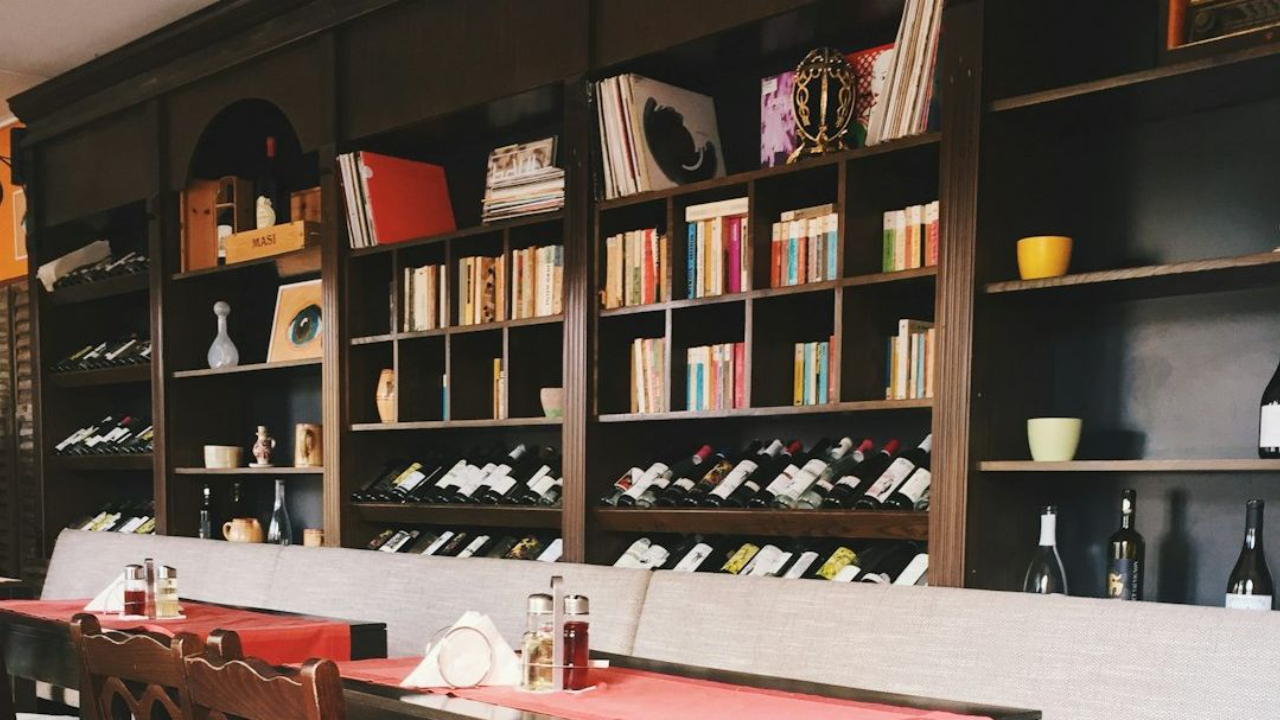
Technically, it’s Sunday. The Friday Transmission arrived a tad late. Some tracks take a little longer to cue.

Friday has always belonged to women.
Not because of happy hour.
Not because of the weekend.
Because Friday was literally named after a goddess.
-
Freya — Norse goddess of love, beauty, fertility, magic, and war. She holds both sensuality and strength. Pleasure and power.
-
Frigg — the Norse queen associated with wisdom, foresight, motherhood, and sovereignty. The woman who sees what is coming and still holds the center.
-
Venus — Roman goddess of love, beauty, attraction, and creative force. Not just romance, but magnetism. Not just adornment, but life force.
-
Aphrodite — Greek goddess of sensuality, embodiment, desire, and generative feminine power.
Friday is ancient feminine energy hiding in plain sight.
And when women gather on Fridays, something older than social media wakes up.
Let’s talk about why.
Friday equals Freyja’s Day.
Friday equals Venus Day.
Friday is magnetic, creative, embodied feminine love.
So when you gather with your girlfriends on Friday, you are not just getting drinks.
You are participating in an ancient rhythm.
I call it FriYAY.
Because joy is resistance.
Pleasure is protest.
Showing up for your women consistently is a strategy.
Before we go further, a quick note about how I approach essays like this.
I’m not a historian or religious scholar. I’m a reader, a writer, and someone deeply curious about how mythology, culture, and community travel through time.
Hedda’s Mix Tape is where I follow those threads and share what they reveal about the moment we’re living in.
Think of it as part essay, part cultural mix tape.
I write this with humility and curiosity.
Drawn to the symbolism.
Drawn to the history.
Drawn to the reclamation.
I am not claiming priestesshood.
I am not speaking for covens or spiritual lineages that carry depth and devotion I deeply respect.
I am learning.
Observing.
Studying.
What fascinates me is the archetype.
Because women have always worked in archetypes.
Maiden.
Mother.
Crone.
Muse.
Mystic.
Warrior.
Witch.
Exploring archetypes is not pretending to be initiated into something.
It is psychological, cultural, and literary work.
It examines how societies project meaning onto women.
It is asking why certain types of women get sanctified, and others get punished.
The witch is an archetype worth looking at directly.
Not the Halloween version.
The historical one.
The independent thinker.
The woman outside sanctioned structures.
The woman who chose community over compliance.
And the consequences were brutal.
Across Europe and colonial America, tens of thousands of people—most of them women—were accused, tortured, and executed during the witch hunts. Salem became the most famous American (United States of America) example, but it was only a small piece of a much larger, darker, and more destructive history.
These accusations did not happen in a vacuum.
Many of the women targeted were widows, healers, unmarried women, midwives, older women, or women who held land, property, knowledge, or influence outside male control.
Sometimes accusations conveniently followed disputes over inheritance, land, or authority.
What gets framed as superstition often hides something much more material.
Control.
Power.
Land.
Real estate.
Maybe the witch was feared not because she was unnatural.
But because she was ungovernable.
And maybe one of the most radical things women can do now is exactly what so many of them were once punished for:
Gather.
Share knowledge.
Think out loud together.
Your personal book club, knitting circle, craft night, stitch-and-bitch…
Whatever shape it takes.
Women gathering together to talk, make things, read things, and think things through.
Discussion.
Critical thinking.
Female friendship.
Shared inquiry.
This has always been one of the most durable forms of infrastructure we have.
Ideas travel that way.
Knowledge travels that way.
Courage travels that way.
And maybe not everything sacred needs to be content.
Maybe some things stay in the circle.
Maybe gathering itself is the quiet magic.
As of right now, there are 42 Fridays left in the year.
Forty-two chances to gather.
Forty-two chances to toast.
Forty-two chances to build matriarchy in real time.
This year, the calendar gave us three Friday the 13ths.
February.
March.
November.
Two have already passed.
One remains. One more portal.
One more strange intersection of Venus and the sacred 13.
One more day, the calendar tried to make ominous that we might decide to claim as our own.
Thirteen was sacred long before it was scary. Thirteen lunar cycles in a year.
Ancient goddess cultures honoring cyclical wisdom. Matriarchal calendars tracking the moon and the body. 13 menstrual cycles.
What if Friday the 13th is not unlucky? What if it is simply powerful?
For me, the week has a rhythm.
Monday is motivation.
Red lipstick. Resistance. Power.
Monday is the day you build the thing. The day you send the email.
Pitch the idea. Start the project.
Monday says:
Do not shrink. Do not soften your ambition.
Wednesday is shout-outs.
Midweek is when we amplify each other.
Tag her. Recommend her. Celebrate her work publicly.
Wednesday says:
Look at her. Look what she built. Look what she wrote. Look what she made possible.
Because women lifting other women is not fluff.
It’s infrastructure.
Women Wednesdays.
Friday is for women.
Friday is the gathering day.
Dinner tables. Group chats. Long walks. One more glass of wine.
Friday says:
Sit next to me and tell me the truth.
Tell me what’s working. Tell me what’s hard. Tell me what you’re dreaming about next.
All three matter.
But Friday feeds the soul differently.
Something else I’ve noticed out there in the ether. There is something happening right now on Threads.
If you don’t know what Threads is, it’s a text-based social platform connected to Instagram that launched in 2023 as a space for public conversation. Yes, owned by Meta.
But something interesting is happening there.
GenX is definitely on Threads in full force.
The We Do Not Care Club #WDNC is also on Threads and started on TikTok. One night, a clip launched what is now known as the We Do Not Care Club, a viral platform where women navigating perimenopause and menopause share unapologetic “I don’t care” declarations. What began as Melani Sanders venting became a rallying cry for millions of women reclaiming their agency and redefining midlife not as decline, but as liberation.
These social experiments - WDNC and the vibe on Threads are full of something that feels different.
The humor. The dishing. The softness. The support.
The girl-same energy. The subtle organizing.
The Constitution of the U.S. Threads account also known as “Connie,” and other important documents share history, sass, and support.
It feels communal. It feels like group chat energy at scale.
When women publicly amplify women, that is infrastructure.
Digital matriarchy does not look like thrones.
It looks like comment sections are full of:
I’ve got you.
The Hedda’s Mix Tape Reading Circle
Which brings me to something I’ve been thinking about.
I’m starting a Hedda’s Mix Tape Reading Circle.
Part of me imagines a living room in Los Angeles.
A stack of books.
A room full of brilliant women arguing about ideas.
Part of me also imagines a long table somewhere like Solidarity Restaurant in Santa Monica, where the lights are warm, and conversations stretch a little longer than planned.
And a start with a virtual room to get things started.
Women reading.
Thinking.
Disagreeing.
Connecting.
Building something quietly powerful.
So let’s start with one.
The first Hedda’s Mix Tape Reading Circle will happen in June virtually and then later in the Summer, in Los Angeles, and we’re starting with a book that fits this essay perfectly:
In Defense of Witches — Mona Chollet
No homework required. Just curiosity and a love of good conversation.
Join the Reading Circle - sign up for an inviation, space will be limited to keep a conversational group size.
Two quick questions on the form:
What book has most changed the way you see the world?
Are you interested in LA gatherings, virtual salons, or both?
Because matriarchy doesn’t start with domination.
It starts with women reading in a room and thinking out loud together.
And that feels exactly right.
Maybe Friday was always meant for this.
Women gathering.
Ideas moving across the table.
Truth spoken out loud.
FriYAY!
Protect your queendom.
Press play.
Sample
“Women’s friendships are a renewable source of power.”
— Jane Fonda
Track Notes
Women’s gatherings have often been dismissed as casual or social, but history suggests otherwise.
Ideas travel in circles.
Across dinner tables. Across letters. Across book clubs, knitting circles, and quiet conversations that shape how women see the world.
Sometimes culture shifts because of speeches and revolutions.
And sometimes it shifts because women are reading in a room and thinking out loud together.
Liner Notes
In Defense of Witches — Mona Chollet
A cultural history examining how women who lived outside traditional domestic and economic structures were reframed as dangerous and persecuted. Chollet reframes the witch as a symbol of female autonomy, intellectual independence, and refusal.
The Myth of the Goddess — Anne Baring & Jules Cashford
One of the most comprehensive studies of goddess traditions across ancient civilizations and how those stories evolved through mythology, religion, and culture.
Hagitude — Sharon Blackie
A reclaiming of the “hag” archetype and the wisdom of older women. Blackie draws on mythology, folklore, and psychology to explore aging as a source of creativity, authority, and sovereignty.
Goddess Symbols — Clare Gibson
A visual and cultural exploration of goddess iconography across civilizations, tracing how feminine power, fertility, wisdom, and sovereignty were represented long before later religious traditions reshaped those stories.
The Language of the Goddess — Marija Gimbutas
A landmark archaeological study examining prehistoric European symbolism, ritual objects, and art connected to early goddess traditions and earth-centered spiritual systems.
The Sacred Hoop — Paula Gunn Allen
A foundational work examining Indigenous traditions and spirituality, highlighting the central role women held in many Native cultures before colonial systems reshaped those societies.
Cassandra Speaks — Elizabeth Lesser
A reinterpretation of the Cassandra myth examining how women’s voices have historically been dismissed or punished when they challenge dominant narratives.
Other Dates Worth Marking
April 22 — Earth Day (Global)
Often associated with ecofeminism and women-led environmental movements.
May 10 — Mother’s Day (United States)
A complicated day about lineage, caregiving, and invisible labor.
June 19 — Juneteenth (United States)
Commemorating the end of slavery.
August 26 — Women’s Equality Day (United States)
Marks the certification of the 19th Amendment.
October 11 — International Day of the Girl (Global)
Celebrating girls’ rights and leadership.
November 13 — Friday the 13th
The final one this year.
Another strange intersection of Venus and the sacred 13.
Another portal, the calendar, labeled unlucky, that we might decide to reclaim.
Mark the calendar.
Not for the superstition.
For the gatherings.
History is not written only in revolutions and elections.
Sometimes it is written in living rooms.
In circles of women reading, thinking, and telling the truth.
Stay connected with news and updates!
Join our mailing list to receive the latest news and updates from our team.
Don't worry, your information will not be shared.
We hate SPAM. We will never sell your information, for any reason.
